
If you're freelancing in the Netherlands, you'll quickly come across terms like KVK number, VAT number, and VAT Identification Number.
Whether you're operating as a Dutch sole proprietor or working internationally through an Estonian company like Xolo Leap, understanding what these numbers mean can help you stay compliant and invoice clients correctly.
In this guide, we'll explain what each identifier is, what it's used for, and when you need one.
What is a KVK number (Chamber of Commerce Number)?
The KVK number, or Kamer van Koophandel number, is your business’s unique identifier in the Netherlands. Issued by the Dutch Chamber of Commerce (Kamer van Koophandel or KVK), this number confirms that your business is officially registered in the Dutch Trade Register.
Purpose of the KVK number
The KVK number serves as a critical identifier for your business. It is required for:
- Official contracts and agreements.
- Invoices sent to clients and customers.
- Business correspondence, such as letters and emails.
- Websites and online webshops.
- Communication with Dutch authorities.
Essentially, it is your business’s fingerprint in the Dutch business world. Without it, your company cannot operate legally in the Netherlands.
Who needs a KVK number?
Every business operating in the Netherlands is required to have a KVK number. Whether you’re a freelancer (eenmanszaak), a partnership (vennootschap onder firma), or a limited company (BV), you must register with the KVK to receive this number.
💡 If you're running your business through an Estonian company, you won't receive a Dutch KVK number. Instead, your company is registered in the Estonian Business Register. However, you may still encounter KVK numbers when working with Dutch clients, suppliers or partners.
What is a VAT number (Omzetbelastingnummer)?
The VAT number, or Omzetbelastingnummer, is issued by the Dutch Tax Authority (Belastingdienst) when you register your business for VAT (Value Added Tax). This number is specifically used for communication between your business and the Belastingdienst regarding VAT matters.
Formats of VAT numbers
The format of VAT numbers vary depending on your business’ structure:
- Eenmanszaak (sole proprietorship): [9-digit BSN (citizen service number)] B [2 sub-digits]
- Other business types (e.g., partnerships or limited companies): [9-digit number] B [2 sub-digits]
Purpose of VAT numbers
A VAT number is used for administrative purposes and compliance with Dutch tax laws. It’s primary purpose is for:
- Submitting VAT returns and other filings to the Belastingdienst.
- Any direct correspondence with the tax authority.
Unlike the VAT ID number (explained below), the VAT number is not typically shared with clients or listed on invoices.
Who needs a VAT number?
All businesses operating in the Netherlands, and subject to VAT, are required to have a VAT number. This includes most businesses, regardless of size or industry.
💡 Businesses established in Estonia receive an Estonian VAT number if they register for VAT. The purpose is the same: communicating with the local tax authority and fulfilling VAT obligations.
What is a VAT Identification number (BTW-Identificatienummer)?
The VAT Identification Number, also known as the BTW-identificatienummer in Dutch, is different from a standard VAT number. This number is used specifically for invoicing and compliance with EU VAT regulations, especially if your business engages in cross-border transactions within the European Union.
Formats of the VAT Identification number
The VAT Identification number follows a specific format depending on your business type:
- Eenmanszaak (sole proprietorship): NL [random 9-digit number] B [2 sub-digits]
- Other business types (e.g., partnerships or limited companies): NL [9-digit VAT number] B [2 sub-digits]
💡 The same principle applies across the EU. If your business is established in Estonia, you'll receive an Estonian VAT ID beginning with EE instead of NL once registered for VAT.
Purpose of the VAT Identification number
This number is required for several key purposes:
- Invoicing: All invoices issued to clients within the EU must include your VAT ID number to comply with tax regulations.
- Cross-border transactions: It is used to process VAT for cross-border trade within the European Union.
- Website and webshop compliance: Businesses with an online presence, especially those selling products or services, must display their VAT ID number on their websites and in their terms and conditions.
Who needs a VAT Identification number?
Any business operating within the EU that issues invoices or engages in cross-border transactions must have a VAT ID number. It is a requirement for all businesses registered for VAT in the Netherlands.
Key differences between KVK, VAT Number and VAT ID numbers
To recap, here’s a quick summary of the main differences between these not-too-complex identifiers:
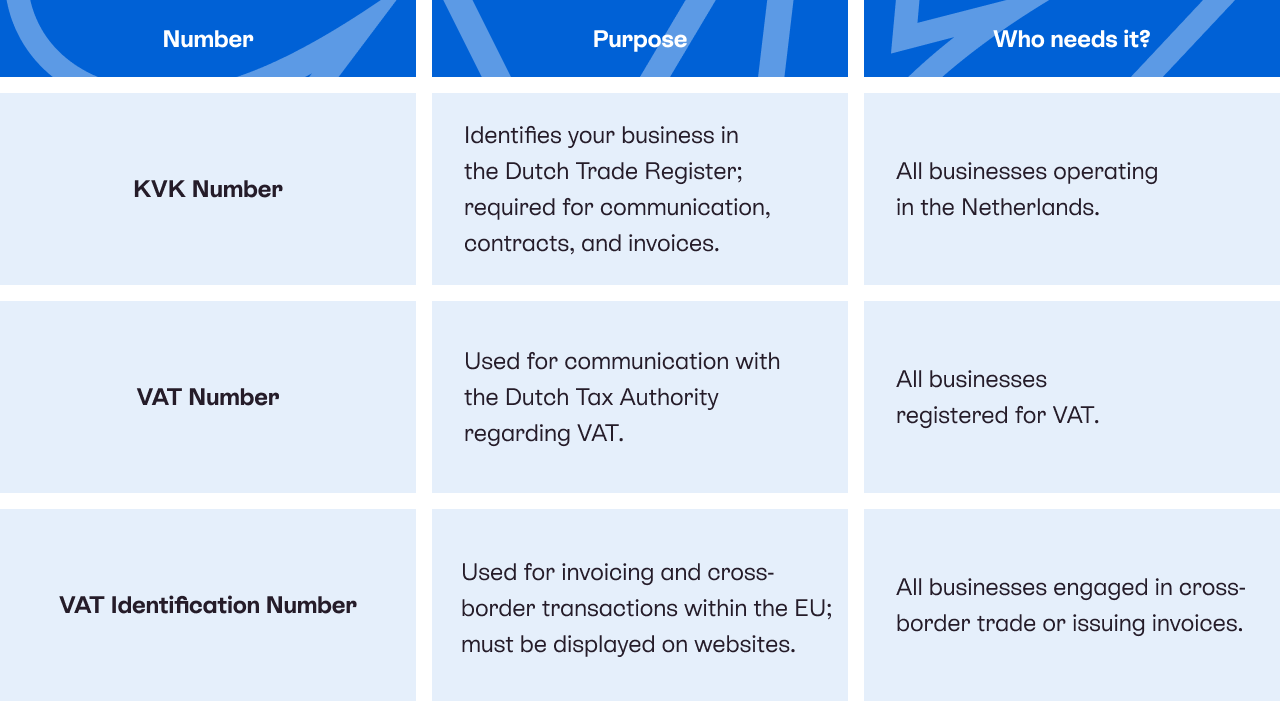
Note: These identifiers apply to Dutch-registered businesses. If your business is incorporated in Estonia, you'll instead use your Estonian company registration number and, if applicable, an Estonian VAT number and VAT ID.
Understanding Business Registration Numbers Across Europe
Business registration numbers can look different depending on where your company is established, but they all serve the same purpose: identifying your business and helping you stay compliant.
If you're freelancing in the Netherlands with a Dutch business, you'll work with a KVK number, a VAT number and a VAT ID. If you're operating internationally through an Estonian company, you'll instead use your Estonian registration number and, where applicable, an Estonian VAT ID.
Understanding these differences makes it easier to invoice clients, communicate with tax authorities and confidently do business across Europe.

Build an International Business with Xolo Leap
Thinking beyond a traditional Dutch sole proprietorship? Xolo Leap helps freelancers and business owners run an EU company from Estonia with accounting, compliance and ongoing support included so you can focus on growing your business across borders.