Martina’s journey from accidental freelancer to marketing herself
on November 25, 2026 • 6 minute read
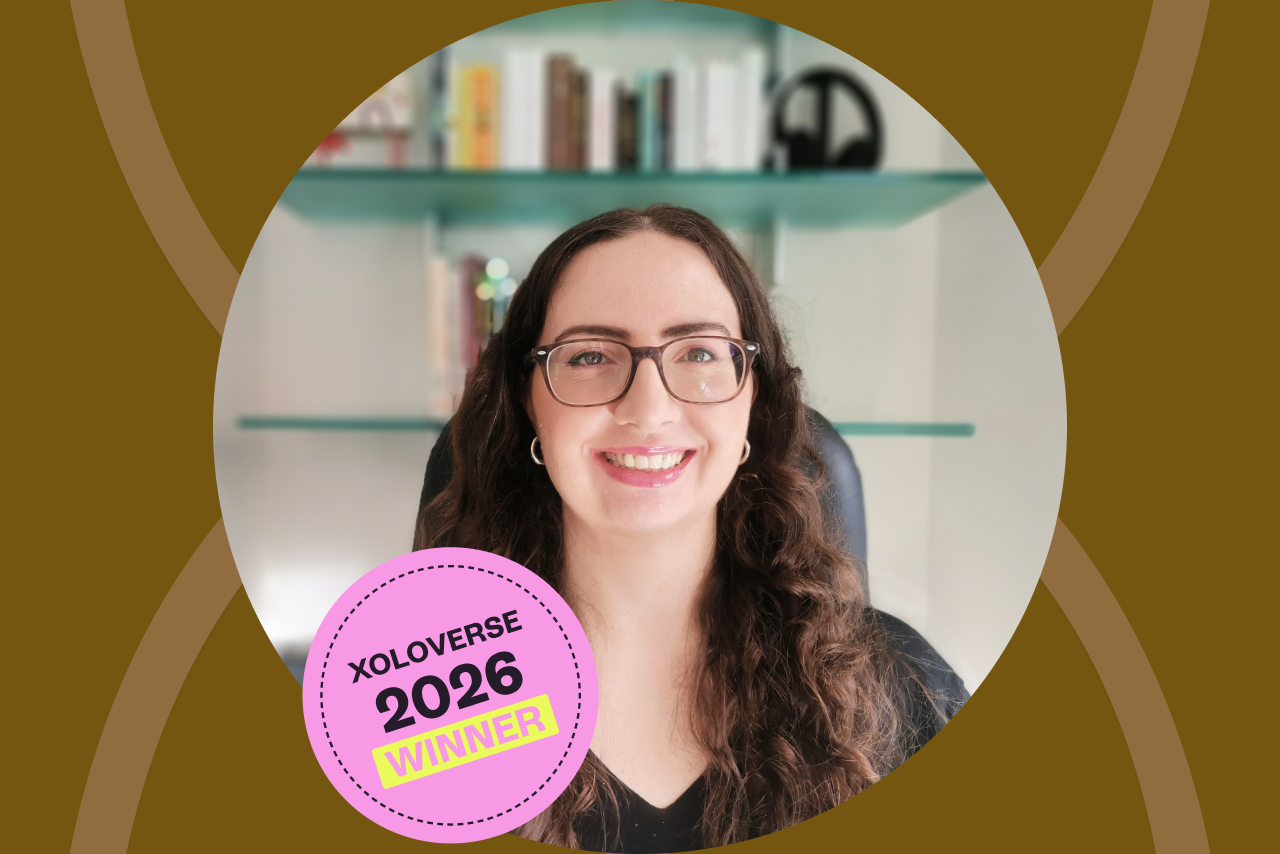
Meet Martina Zazza, an Italian marketing freelancer based in Granada and winner of the behind-the-scenes category of this year’s Xoloverse: Next Top Independent. She has built a career in digital marketing, SEO and translation since 2016, almost entirely through word of mouth, across three countries. Now the search engines that her career was built around are being replaced by AI answers, and she is working out what comes next in public, for the first time, without a finished plan. “Curiosity has taken me further than any plan.”
Martina won the behind-the-scenes category with a video about the gap between what people think remote work looks like and what it actually looks like.
Hey Martina! Could you tell us a bit about yourself and where you are based?
I’m Martina. I’m 36, I’m Italian, and I live in Spain, in Granada. I started freelancing in 2016, and I’ve lived in a few different countries in Europe along the way, partly thanks to the job.
Copywriting, SEO, digital marketing, translation into Italian. That is where I started and it is still roughly where I am.
How did the freelancing start?
I did my Master’s in the Netherlands and started working there afterwards, in an office job in marketing. The company failed after about nine months. I thought, oh my god, what am I going to do? Is it me? It wasn’t me, of course.
A couple of months later I moved to Germany, and when COVID hit I moved again, to Spain. While I was looking for a marketing job I stumbled on the online platforms, Upwork and all of those, and started doing small jobs. Consulting in copywriting, SEO, digital marketing and Italian translation, mostly as a way to make some money and fill the time while I applied for office jobs.
Then I built relationships with agencies and companies, mostly international. English, American and Russian companies that wanted to market their products in Italy, and I became their contact for that. I don’t use the platforms at all anymore. It is all word of mouth now, people getting to know people. I never had the moment where I had to say, okay, now I go back to an office. I always had work.
Ten years of being your own boss. What has that actually looked like?
I think I was the pioneer of working from home. People used to say they would never do it, and then COVID happened and now everyone loves it. I still say that if I have to go into an office, you have to pay me a lot of money.
It gave me freedom. I’ve lived in the Netherlands, in Germany and in Spain, so I also had to work out the bureaucracy of being your own boss in each of those, and in Italy as well. There are challenges there, especially at the start. It is hard in the beginning because you don’t make much money, maybe the first six or eight months. But once you get going, you don’t want to go back.
The work is up and down. After summer everyone wants to do marketing, then Black Friday, then Christmas, and that is when I work a lot, sometimes on Sundays. Then it is July again and you think, am I going to have work in September. It is not only about the money, it is mental. You have to be resilient for the up and down. And you have to understand that you have to save money for taxes. When I was 26 I would look at my bank account, then six months later, oh my god. I would be angry for a whole day about why I have to pay so much. You adapt.
I also almost never say no to something new, unless the pay is ridiculous. Even if the product sounds boring, you learn. I have worked for companies dealing with European environmental regulations and I knew nothing about it. You are never working on the same product or the same campaign.
This summer in Granada was the worst I remember. Three months of 40 degrees. So I rented a cabin in Asturias for a month and went to work from there. I’m not a digital nomad working in five different countries, but if I want to see my family in Italy I take my laptop and work two weeks from there. That is something a lot of people don’t get to do.
What freelancing has really made room for is small rituals. This year I spent a month in South Korea simply because I wanted to experience living somewhere completely different. Being Italian, I felt it was only right to thoroughly investigate the local café scene, so I quickly developed a very demanding schedule of trying a new café every day before work. I’d sit there with a coffee and convince myself this absolutely counted as cultural research. That’s probably the thing I value most: if something interests me, I can explore it.
Ten years in, SEO is close to obsolete. What are you doing about it?
I worked many years in SEO, search engine optimization, and now it is pretty much obsolete. People use AI, they read the first answer that comes up and they don’t click through to websites anymore. Not never, but less. From what I see it is somewhere between 50 and 70% less than two years ago, depending on which year you look at. Pew Research found something similar from the other direction: when Google shows an AI summary, people click a search result in 8% of visits, against 15% when there is no summary.
So what companies want now is to be in the AI. It is not enough to be first. You want to be the only one. And the technology changes every month. It is challenging, but it is also interesting.
I know a lot of people are angry about AI. The environmental side, the creativity side, all of that. But people still use it and companies still want to save money. With every technology it is the same. When it makes your life easier, people are going to use it.
For now I am sticking to the official courses, the ones given by the platforms themselves. For general knowledge about AI, and for people getting started, I would recommend Claude Academy, especially Claude 101. For marketing and Microsoft Office, there is Microsoft’s Copilot for Marketing. Having that on your CV or your LinkedIn is a plus, because a lot of companies don’t know what to do with AI themselves. They don’t know how to approach it.
What I see working right now is companies producing something with AI and wanting a person to check it. I don’t know how long that will last.
There are two camps at the moment. I hate AI and I won’t work with it, or AI is the best and I’ll do everything with it. I would like to be somewhere in the middle. I have lost some work to AI, mostly in the last six months. One agency I worked with decided to switch almost entirely to AI-generated content for their website, although they still rely on human input for social media and creative work. But what can I do? I have to think of something. I still haven’t figured out the strategy.
And then you entered Xoloverse anyway.
I work in marketing, and sometimes I am terrible at marketing myself. I thought, well, let’s give it a try.
I have relied on word of mouth and my CV for ten years. I never marketed myself. And I am a private person, so social media is the thing I have been putting off. I don’t want to tell everyone everything. But I can see it is not just important, it is a must. If you don’t do it, you are left out.
I entered because it looked like fun, but also because I wanted to test myself. I’ve spent many years helping other people with their marketing while mostly avoiding my own. The video was about the difference between what people think remote work looks like and what it actually looks like. People imagine you answering emails from a beach in Bali. Most days you’re just sitting at your kitchen table wondering why a meeting could have been an email.
I already had the idea and the tagline. The difficult part was putting my face on video and pressing send. Winning was an amazing surprise, but getting myself out there was the real reason I entered.
The biggest surprise has been that I’ve actually enjoyed the process. Since then I’ve been experimenting with videos in CapCut and, unexpectedly, I like editing them. That’s not something I would have said a year ago. The part I can control is consistency. I can’t control the algorithm, but I can decide to post five times a week and do that. You never know what is going to take off.
What would you tell someone standing where you were standing at the start?
Don’t limit yourself to your home market. I don’t work much with Italian companies. I branched out and it has been great. You might think people from your own culture will understand you better, but it doesn’t have to be like that. You learn so much more working with people from other countries. Things you didn’t know you could learn.
And market yourself from the beginning. I never did, so now I have to go back and work out how to tell the story. Not a diary exactly, but write down what you did and what you learned, and document it. People like to see the journey, not only the results.
The other thing is that the circumstances don’t have to be good for you to start. I had just finished studying, the company I worked for had failed, and I gave it a try anyway. It worked. I am not going to say it will work for everyone, but you never know.
And you don’t need to have a five-year plan. Some of the best things in my career came from saying yes to something I knew little about.
What one message would you leave our readers with?
If there’s one thing I’ve learned, it’s that curiosity has taken me further than any plan. I didn’t plan to live in different countries, become a freelancer, or end up talking publicly about my career. I just kept saying yes to things that interested me and seeing where they led, with an open mind.
You don’t need to see the whole path. You just need to be curious enough to take the next step. The one thing you do need to know well is the bureaucracy, so it doesn’t catch you out. Especially in Spain. Looking back, the things that changed my life all started with a simple “why not?”
Ready to go solo?
Xolo takes the invoicing, expenses and paperwork off your plate, so you can spend your time on the work you actually want to be doing.
Related blogs
Subscribe to
our newsletter
and get the latest updates and expert
business tips straight to your inbox.