---
title: Building a Product Design Career — Powered by Projector Institute
description: Discover how Yulia, Senior Product Designer at Xolo, grew from a self-taught designer into a product leader through mentorship, UX research, and her experience at Projector Institute.
image: https://blog.xolo.io/hubfs/Xolo_Blog_Projector.png
---
[Xolo](https://www.xolo.io/zz-en)
- Solutions
## Global solutions 🌎
Everything you need to run your independent business from anywhere
Local solutions
e-Residency company
[Run and set up your company from anywhere](https://www.xolo.io/zz-en/leap) [Switch your company to Xolo](https://www.xolo.io/zz-en/switch-to-xolo) [E-commerce support](https://www.xolo.io/zz-en/e-commerce)
No company? No problem
[Invoice and get paid without a company](https://www.xolo.io/zz-en/go)
## Local solutions 🏡
Tailored solutions to perfectly fit your locations needs
[Spain 🇪🇸 Work as autónomo in Spain](https://www.xolo.io/es-en)
[Italy 🇮🇹 Start a business in Italy](https://www.xolo.io/it-en)
- Resources
- Guides & Inspo
- [Blog](https://blog.xolo.io/)
- [Finding clients](https://lp.xolo.io/how-to-find-clients)
- [Partner program](https://www.xolo.io/zz-en/partner-program)
- [FAQ](https://www.xolo.io/zz-en/faq)
- Tools
- [Freelance toolkit](https://www.xolo.io/zz-en/freelancer-tools)
- [Free invoice generator](https://www.xolo.io/zz-en/free-invoice-generator/sales)FREE
- [Pricing](https://www.xolo.io/zz-en/pricing)
- About Xolo
- [About Xolo](https://www.xolo.io/zz-en/about)
- [Careers](https://www.xolo.io/zz-en/careers)
- [Press](https://www.xolo.io/zz-en/press)
- [Contact center](https://www.xolo.io/zz-en/about#section-about)
- [Hire freelancers](https://www.xolo.io/zz-en/teams)
- [Login](https://app.xolo.io/hub/login?locale=zz-en) [Sign up](https://app.xolo.io/hub/signup)
[Sign up](https://app.xolo.io/hub/signup)
- [Hire freelancers](https://www.xolo.io/zz-en/teams)
- [Home](https://www.xolo.io/zz-en)
- Solutions
- Resources
- [Pricing](https://www.xolo.io/zz-en/pricing)
- About Xolo
- [Hire freelancers](https://www.xolo.io/zz-en/teams)
- Main menu
- Global solutions 🌎
- Everything you need to run your independent business from anywhere
- e-Residency company
- [Run and set up your company from anywhere](https://www.xolo.io/zz-en/leap)
- [Switch your company to Xolo](https://www.xolo.io/zz-en/switch-to-xolo)
- [E-commerce support](https://www.xolo.io/zz-en/e-commerce)
- No company? No problem
- [Invoice like a company](https://www.xolo.io/zz-en/go)
- Local solutions
- Local solutions 🏡
- Tailored solutions to perfectly fit your locations needs
- [Spain 🇪🇸 Work as autónomo in Spain](https://www.xolo.io/es-en)
- [Italy 🇮🇹 Start a business in Italy](https://www.xolo.io/it-en)
- Back to top
- [Login](https://app.xolo.io/hub/login?locale=zz-en)
- **en**
Language:
English
[Spanish](https://www.xolo.io/zz-es)[Italian](https://www.xolo.io/zz-it)
Region:
Location independent
[Spain](https://www.xolo.io/es-en)[Italy](https://www.xolo.io/it-en)[Estonia](https://www.xolo.io/ee-en)
Products may differ between regions
- [Login](https://app.xolo.io/hub/login?locale=zz-en)
- [Hire freelancers](https://www.xolo.io/zz-en/teams)
- Main menu
- Guides & Inspo
- [Blog](https://blog.xolo.io/tag/teams)
- [Finding clients](https://lp.xolo.io/how-to-find-clients)
- [Partner program](https://www.xolo.io/zz-en/partner-program)
- [FAQ](https://www.xolo.io/zz-en/faq)
- Tools
- [Freelance toolkit](https://www.xolo.io/zz-en/freelancer-tools)
- [Free invoice generator](https://www.xolo.io/zz-en/free-invoice-generator/sales) FREE
- [Login](https://app.xolo.io/hub/login?locale=zz-en)
- **en**
Language:
English
[Spanish](https://www.xolo.io/zz-es)[Italian](https://www.xolo.io/zz-it)
Region:
Location independent
[Spain](https://www.xolo.io/es-en)[Italy](https://www.xolo.io/it-en)[Estonia](https://www.xolo.io/ee-en)
Products may differ between regions
- [Login](https://app.xolo.io/hub/login?locale=zz-en)
- [Hire freelancers](https://www.xolo.io/zz-en/teams)
- Main menu
- [About us](https://www.xolo.io/zz-en/about)
- [Careers](https://www.xolo.io/zz-en/careers)
- [Press](https://www.xolo.io/zz-en/press)
- [Contact center](https://www.xolo.io/zz-en/about#section-about)
- [Login](https://app.xolo.io/hub/login?locale=zz-en)
- **en**
Language:
English
[Spanish](https://www.xolo.io/zz-es)[Italian](https://www.xolo.io/zz-it)
Region:
Location independent
[Spain](https://www.xolo.io/es-en)[Italy](https://www.xolo.io/it-en)[Estonia](https://www.xolo.io/ee-en)
Products may differ between regions
- [Login](https://app.xolo.io/hub/login?locale=zz-en)
- [Login](https://app.xolo.io/hub/login?locale=zz-en)
[All articles](https://blog.xolo.io/)
# Building a Product Design Career — Powered by Projector Institute

Written by [Xolo](https://blog.xolo.io/author/xolo)
on April 06, 2026 • **4 minute read**
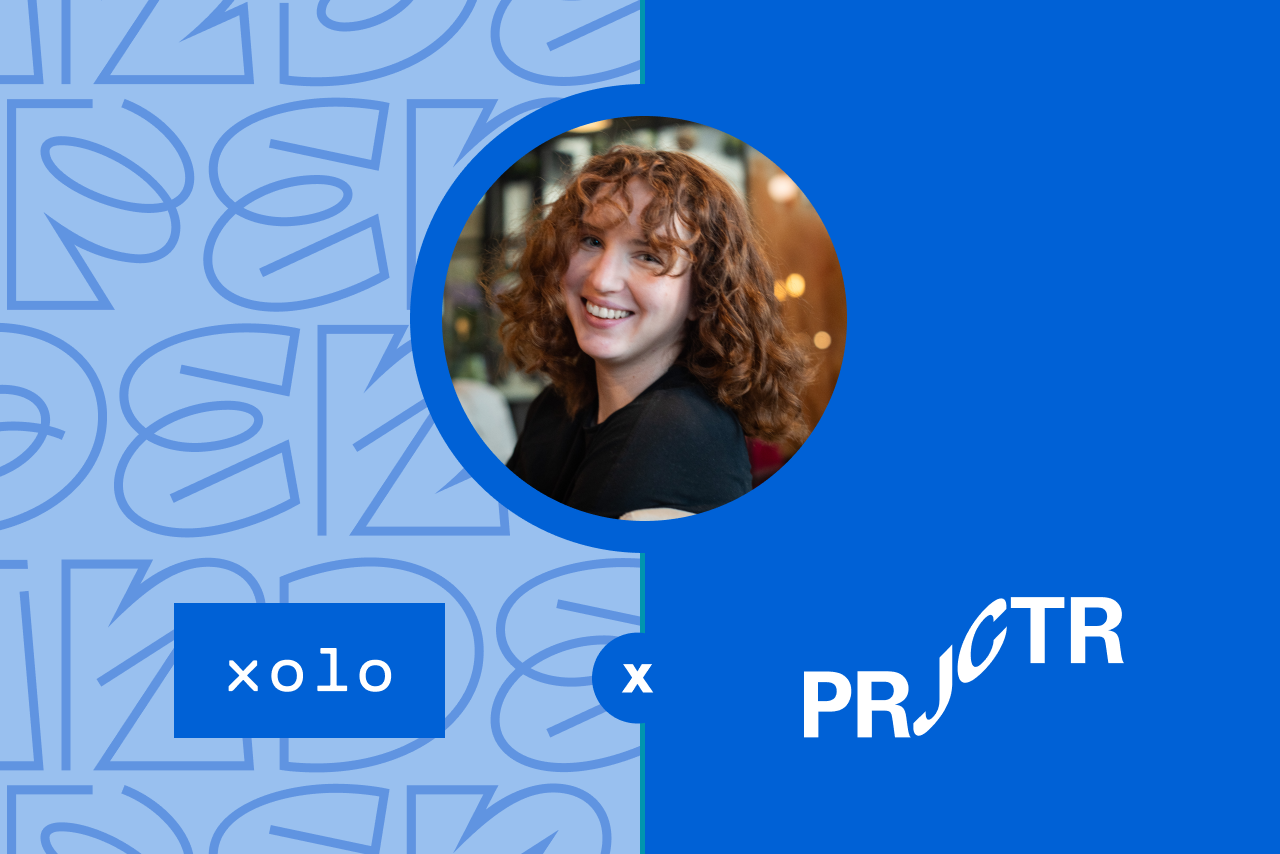
Meet Yulia Gykhareva, a Senior Product Designer at Xolo whose journey into product design began long before she knew the term “UX.” From teaching herself Photoshop as a kid to discovering the power of research-driven design, her path has been shaped by curiosity, mentorship, and hands-on learning. In this inspiring story, Yulia shares how structured learning transformed her career, the moment UX truly “clicked,” and why she believes that “product design is a path, not a result.”
## **How It Started: From Marketing to UX Design**
#### **Q: Could you introduce yourself? - and tell us about your journey into product design?**
Hi, I’m Yulia. I’m currently a Senior Product Designer at Xolo.
My path into design wasn’t straightforward. I actually have a marketing and business management degree. Like many people in Ukraine, I studied one thing and ended up working in something completely different. After university, I worked at a small hobby store in a marketing role. It was one of those entry-level positions where you do everything — sales, PR, marketing. At some point, they asked me to create visual materials like business cards and social media posts. I had been self-learning design since I was a kid. I started with Paint, then Photoshop. So I took on the visual tasks — and that’s how design slowly became part of my professional life.
Later, I joined an event agency as a graphic designer. It was intense. During summer seasons, I slept maybe three hours per night for months. But it gave me real hands-on experience.
UX came into my life almost accidentally. A former colleague who moved into IT told me there was an open position for a UX designer. I had to Google what UX was. I didn’t have an actual portfolio at the time so I brought one mockup made in Corel Draw to the interview — and somehow, I got the job and became their junior UX/UI designer. That’s where everything really started.
#### **Q: At what point did you realise you needed something more?**
After two or three years working as a UX/UI designer, I felt stuck. Officially, my title was “Middle UX/UI Designer,” but if I’m honest, the skillset I was using leaned more toward junior level. I was doing mostly manual work — implementing designs, moving things in Figma, executing tasks given by a lead designer. The projects that I worked on had research and stakeholder work handled by separate teams and I felt like I missed out on a lot by not doing the full cycle of UX — research, hypothesis building, testing, validation - by myself. I wanted to move beyond “moving squares on the screen” but collecting the right resources, structuring learning — that takes time. And I felt I needed a new mentor to guide me properly. That’s when Projector Institute came back into focus.
## ****
## **Learning UX at Projector Institute**
#### **Q: Why did you choose Projector Institute — and what changed for you there?**
It was COVID. I was stuck at home with time to think. I had been considering Projector Institute for about a year, but I never had enough time to commit properly. I didn’t want “just lectures.” I wanted to really learn. I knew that if I enrolled, I would need to do homework, put in effort, dedicate time.
I joined the UX Beginning course which lasted about two or three months. We had theoretical lectures and practice sessions with mentors. The mentorship was extremely valuable. We received personalised feedback on every homework assignment — and it was never generic. You could tell they cared and actually read your work.
Even after graduation, I stayed in touch with my mentor, ahrefshii. We’ve had multiple calls over the years. I’m the only product designer at Xolo, which can feel lonely at times so having someone experienced to discuss solutions with is incredibly helpful.
What changed the most for me was the research mindset and discovering the **Double Diamond** framework. This was a particular mind-blowing moment for me. I still hear my mentor’s voice in my head: “All research results should be triangulated.” That framework has really stayed with me.
#### **Q: Was there a specific moment when everything clicked?**
Yes — the final project. We worked with a real client: Nova Posta. We applied everything we learned — interviews, research, synthesis, prototyping.
A few days before presenting to the stakeholder, I was reviewing interview notes and suddenly saw a pattern in user feedback. It was so clear to me.I told my group: “We need to change the prototype.” They thought I was crazy. I updated the prototype, and during the presentation, I pitched the idea. The stakeholder smiled and said: “We already have it in our roadmap.”
That was the moment. It validated the entire process and I realised: this is how decisions are made. This is why we do research. That was incredibly empowering.

## **Applying the Lessons: Designing Products at Xolo and What’s Next**
#### **Q: How did Projector Institute shape your work at Xolo?**
Today at Xolo, I’m responsible for product design decisions. For a long time, I was the only product designer in the company.
I was initially skeptical about courses. My university experience made me think theory is often outdated and not used in real business. But working now with colleagues who studied in European universities, I see that the toolset is the same and that Projector Institute gave me industry-relevant tools — not outdated theory.
#### **Q: What’s next for you — and how does Projector Institute fit into that?**
I’m still looking at Projector Institute programs. I was interested in the Growth course — understanding how UX impacts product growth. I also considered a data-driven design course, focusing on KPIs and decision-making based on data inputs.
Long term, I see my role evolving toward product management. I love the discovery stage. I love working with data. I enjoy recognising patterns and building hypotheses. With AI handling more manual execution, focusing on strategy and decision-making makes sense for me.
#### **Q: What’s one thing you’d want readers to remember, Yulia?**
“Product design is a path, not a result.”
You don’t make something perfect in one go.
You start somewhere.
You iterate.
And each version gets better than the previous one.
And if you want to grow — structure and mentorship make all the difference.
## **It’s official: Xolo meets Projector**
Xolo and Projector Institute are teaming up to support the next generation of people building businesses on their own terms.
This partnership is built on a simple idea: building something of your own starts with the right foundation. Projector Institute helps people develop the skills, confidence, and creative thinking to grow their ideas. Xolo helps turn that momentum into a business that’s clear, compliant, and built to run smoothly.
Yulia’s story is a great example of that journey. From junior UX/UI designer to Senior Product Designer at Xolo, her path shows how much the right learning environment, hands-on practice, and professional community can shape what comes next. For her, Projector Institute played an important role in building that foundation.
Now, that connection comes full circle. As AI makes it faster than ever to test ideas, build products, and launch new ventures, more people are taking the leap from learning and creating to building businesses of their own. But turning skills into something sustainable still takes the right setup.
That’s where this partnership comes in: Projector Institute helps future builders get started, and Xolo helps them build their business with clarity and peace of mind.
Explore Projector Institute programs. Build your product career. And when you’re ready to build something of your own, Xolo is here to support you.
### Let Xolo do the admin work for you.
[Sign up today](https://app.xolo.io/signup/account?plan=pro&locale=zz-en)
[Solo stories](https://blog.xolo.io/topic/solo-stories)
## Related blogs
## Subscribe to our newsletter
and get the latest updates and expert
business tips straight to your inbox.
### Subscribe to our newsletter
**Xolo**
- [About us](https://www.xolo.io/zz-en/about)
- [Contacts](https://www.xolo.io/zz-en/about#section-about)
- [Careers](https://www.xolo.io/zz-en/careers)
- [Privacy policy](https://www.xolo.io/zz-en/privacy)
- [Terms](https://www.xolo.io/zz-en/terms)
**Admin solutions**
- [Invoice without a company](https://www.xolo.io/zz-en/go)
- [Run an E-residency company](https://www.xolo.io/zz-en/leap)
- [Work as autónomo in Spain](https://www.xolo.io/es-en)
- [Start a business in Italy](https://www.xolo.io/it-en)
**Resources**
- [Help Center](https://www.xolo.io/zz-en/faq)
- [Pricing](https://www.xolo.io/zz-en/pricing)
- [Blog](https://blog.xolo.io)
- [Partner program](https://www.xolo.io/zz-en/partner-program)
- [Press](https://www.xolo.io/zz-en/press)
---
© Xolo OÜ. All Rights Reserved.